Author: Pamela Nunez Araya

  • Little Teachers

    Little Teachers

    Little Teachers

    I became a mother thinking I would teach my children about the world. Instead, they became my greatest teachers.

    Like many parents, I imagined I would guide them, protect them, and show them around the world. I did not expect that they would also become mirrors, reflecting parts of myself I had never truly seen.

    The first lesson was not a gentle one.

    One afternoon my daughter looked at me with eyes full of fury and screamed words that felt like knives. In that moment something terrifying happened inside me. My body tensed. My thoughts turned dark. A powerful impulse rose in my hands — the urge to hit, to shout, to overpower the small person standing in front of me.

    The intensity of that moment shocked me. I loved this child more than anything, yet something violent had appeared inside me.

    It was not the first time. The first time I noticed this, she was still a baby.

    I was holding her while she cried endlessly when suddenly a violent force shot through my arms — the urge to shake her with all my strength. I didn’t act on it, but afterward a cloud of shame followed me for hours.

    Over time I began to recognize this surge of energy. It seemed to appear from nowhere. When it did, I searched for ways to release it — not very elegant ones, but effective enough. I would run to the attic and hit the walls. I would rush into my bedroom and scream into a pillow. Sometimes I locked myself in the bathroom just to cry. Still, the shame kept growing.

    One day during a camping trip I became so overwhelmed that I left my daughter in the car and walked away just to breathe. I felt desperate. How could it be possible to love someone so deeply and yet feel such dark impulses toward them?

    The more I tried to suppress it, the heavier it became. I started to believe that something was fundamentally wrong with me.

    Later I learned that many parents experience moments like this but rarely speak about them.

    One day, exhausted by this cycle, I did something different. Instead of escaping the chaos, I stayed. I sat down in the living room and began to meditate while my children played around me.

    Of course, children are children. The moment I sat still they began to fight, shout, and test every boundary. Sometimes I still ran to scream into the cushions. Sometimes tears rolled down my cheeks. At one point my children even began to imitate me — they thought meditation meant screaming into pillows.

    But what I hadn’t expected was that the real noise didn’t come from them. It came from inside me.

    The moment I stopped moving, something in my body didn’t know what to do. It had spent years—decades, really—responding, fixing, anticipating, bracing. Every cry, every demand, every small chaos had trained it into constant motion. And now, in the stillness, there was no outlet. No reaction to perform. No next step to take.

    It felt almost wrong.

    My chest would tighten, as if something was trying to rise but didn’t know how. My shoulders ached with a dull, familiar tension that suddenly had nowhere to go. My jaw would clench, then release, then clench again—as if the body itself was asking, Are we doing something? Should we be doing something? Why are we not doing something?

    There was a strange restlessness, but it wasn’t just mental. It was physical, cellular. Like a current that had always been flowing outward—into action, into reaction—was suddenly being asked to turn back on itself. And it didn’t know the way.

    Memories flickered, not as clear stories but as sensations. Old frustrations. Old fears. Small, unfinished moments that had never been fully felt because there had always been something more urgent to respond to. They didn’t arrive politely. They pressed. They pulsed. They lived in the body as heat, as tightness, as an almost unbearable urge to get up and do something—anything—to make it stop.

    And when I didn’t move, when I let the current continue without interrupting it, there was a kind of quiet panic. Not dramatic, not loud—but deep. A sense that if I didn’t react, something might overflow. I stayed in stillness despite the discomfort. 

    But slowly, something else began to happen. The ache didn’t disappear, but it started to change texture. What first felt like pressure began to feel more like movement. What felt chaotic revealed a rhythm. The body, which had always been trained to respond, was learning—awkwardly, imperfectly—to feel without immediately acting. And that was unfamiliar territory.

    Not peaceful. Not yet. But honest.

    As if, for the first time, the current wasn’t being redirected or suppressed—but simply allowed to complete its path

    Then one afternoon, while I was sitting quietly in the living room, something unexpected happened. A deep peace filled my chest and gently expanded through the room. My children crawled toward me and curled against my body. Within minutes they had both fallen asleep.

    At that moment, I could not believe what was happening. For several minutes, I looked at them in disbelieve, trying to make sense of this hart melting scene.

    Days later Lara screamed at me again. But something inside me had changed. The surge of emotion still rose, but it no longer carried me away. It was the same energy, but now there was space around it. Istead of reacting, I looked into her eyes. And for the first time, I could see her suffering — and my own — without judgment. I could stay with it without drowning in it.

    From that place of clarity I said softly, “Remember that you are loved. It seems you forgot.”

    Was I saying it to her, or to the hidden parts of myself?

    I still don’t know.

    But something opened that day — a quiet freedom. A sense that this journey of motherhood was not only about raising children, but about discovering parts of myself I had never truly seen.

    And so I continue exploring the world, accompanied by my greatest teachers — the small mirrors who keep revealing where I am still learning to meet life with more honesty, more patience, and a little more love.
  • Riding the wave of fear

    Riding the wave of fear

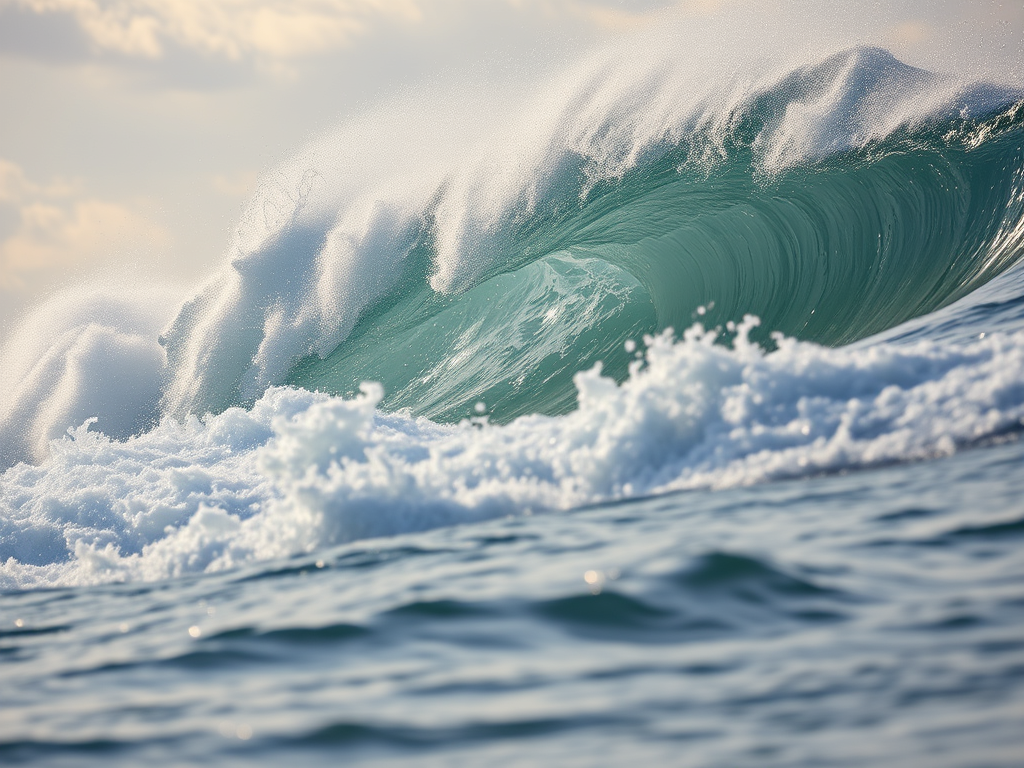
    Fear doesn’t only appear in life-changing moments. Sometimes it shows up in front of a one-meter wave at a surf pool in Rotterdam.

    Most of us know this feeling:
    There is something we secretly want to try—a hobby, an activity, an adventure—but the thought of it makes our stomach tighten.

    For me, it was surfing.

    I had already made several ridiculous attempts. Each one seemed to confirm the same conclusion: surfing just isn’t for me.
    So I did what many of us do when desire meets fear.

    I watched other people do it.

    Video after video of surfers gliding effortlessly across waves while I remained safely on dry land, convincing myself that watching was good enough.

    Until it wasn’t.

    Walking Toward the Wave

    Eventually, curiosity won.

    One afternoon I headed to the surf pool in Rotterdam city center. As I walked from the metro station toward the water, my body was in full protest.

    My heart climbed into my throat.
    My legs trembled.
    My pulse raced.

    And this was for the smallest wave in the pool.

    My mind, of course, had plenty to say about it.

    This is a bad idea.
    You’re going to embarrass yourself.
    You’re definitely going to fall.

    If you fall, you will break your neck.

    But this time I tried something different.

    Instead of forcing myself to be brave…
    Instead of arguing with the anxious voice in my head…

    I simply let the fear be there.

    Thanks to a meditation practice I had learned at Mundo Armonía, I stayed present with the sensations and offered the fear to Source. No fighting. No convincing. Just allowing.

    “Bring meditation to the city,” they had said.

    So I walked to the surf pool meditating with every step.

    Something Unexpected Happened

    That day, I caught almost every wave.

    Not only that—I finally felt what surfers talk about: the joy of playing in the water. The rhythm, the movement, the pure fun of it.

    I walked away stunned.

    Coincidence… or Something Else?

    A few days later, my rational mind began its usual investigation.

    Probably just coincidence.

    So I decided to test the theory.

    I went to the nearest skate park and faced another fear: dropping in from a ramp.

    Again, the familiar physical reaction arrived right on schedule:

    Sweaty hands.
    Racing heartbeat.
    Spiraling thoughts.

    This time, I simply took a breath, did the practice, and dropped in.

    The moment the wheels touched the ramp, the fear disappeared.

    All that remained was speed, thrill, and a vivid sense of being alive.

    Practicing Freedom

    Surfing and skateboarding may sound like small, even silly situations.

    There are no life-or-death stakes.
    No major consequences.

    But what if the mechanism behind these fears is the same one that appears in the bigger moments of life?

    The job change.
    The difficult conversation.
    The creative project we secretly want to begin.

    Maybe hobbies are more than entertainment.

    Maybe they are training grounds for courage.

    Places where we learn to meet fear without fighting it.
    Where we discover that fear can exist in the body without having to decide our next move.

    Because sometimes the lesson isn’t really about surfing.

    Sometimes it’s simply about standing in front of a small wave in a surf pool in Rotterdam…
    feeling your heart pounding in your throat…
    your legs shaking…
    your mind predicting disaster…

    —and discovering that the wave was never the real challenge.

    The real discovery is that fear doesn’t have to decide what happens next.

    And once you see that, something opens.

    Suddenly, life becomes full of small waves waiting to be ridden.

  • Shaped by the storm

    Shaped by the storm

    For months I lived with a sharp pain in the lower corner of my left shoulder blade. It felt as if a knife were lodged beneath the bone, sending shocks through my shoulder, arm, and fingers.

    I tried everything—chiropractic sessions, different pillows, massages, posture correction, yoga, stress reduction, exercises, energy work. Nothing truly changed.

    I didn’t know yet that it was a storm passing through a landscape I had barely learned to inhabit.

    The Night the Pain Spoke

    I had traveled to the mountains of Asturias, in northern Spain, for a healing seminar.

    On the day of my arrival, the pain was present but manageable, though even carrying my backpack felt difficult. That evening there was a demonstration of the healing practices we would study the following day. Participants could volunteer to experience the practices.

    When my turn came, I chose my shoulder.

    Secretly, I hoped the pain would disappear.

    Instead, that night I barely slept.

    The pain intensified dramatically. It felt as if my body were splitting open.

    A Night of Resistance

    I spent most of the night meditating.

    Between meditations, gusts of emotion swept through me—fear, frustration, confusion, helplessness. At moments I silently screamed or cried into the darkness of the hotel room.

    Occasionally, a small flicker of clarity appeared: perhaps life was trying to show me something.

    But I couldn’t grasp it.

    Eventually exhaustion overtook me, and I fell asleep for a short time.

    Walking Through the Mountains

    After two sleepless nights, the morning after the seminar I woke up depleted but determined to go hiking.

    My arm hung from my body like a numb limb, but I walked anyway.

    The mountains offered space—wide valleys, whispering wind and quiet ridges to breathe, cry, and reflect.Somewhere inside I knew that one day it would make sense. 

    But at that moment nothing made sense. 

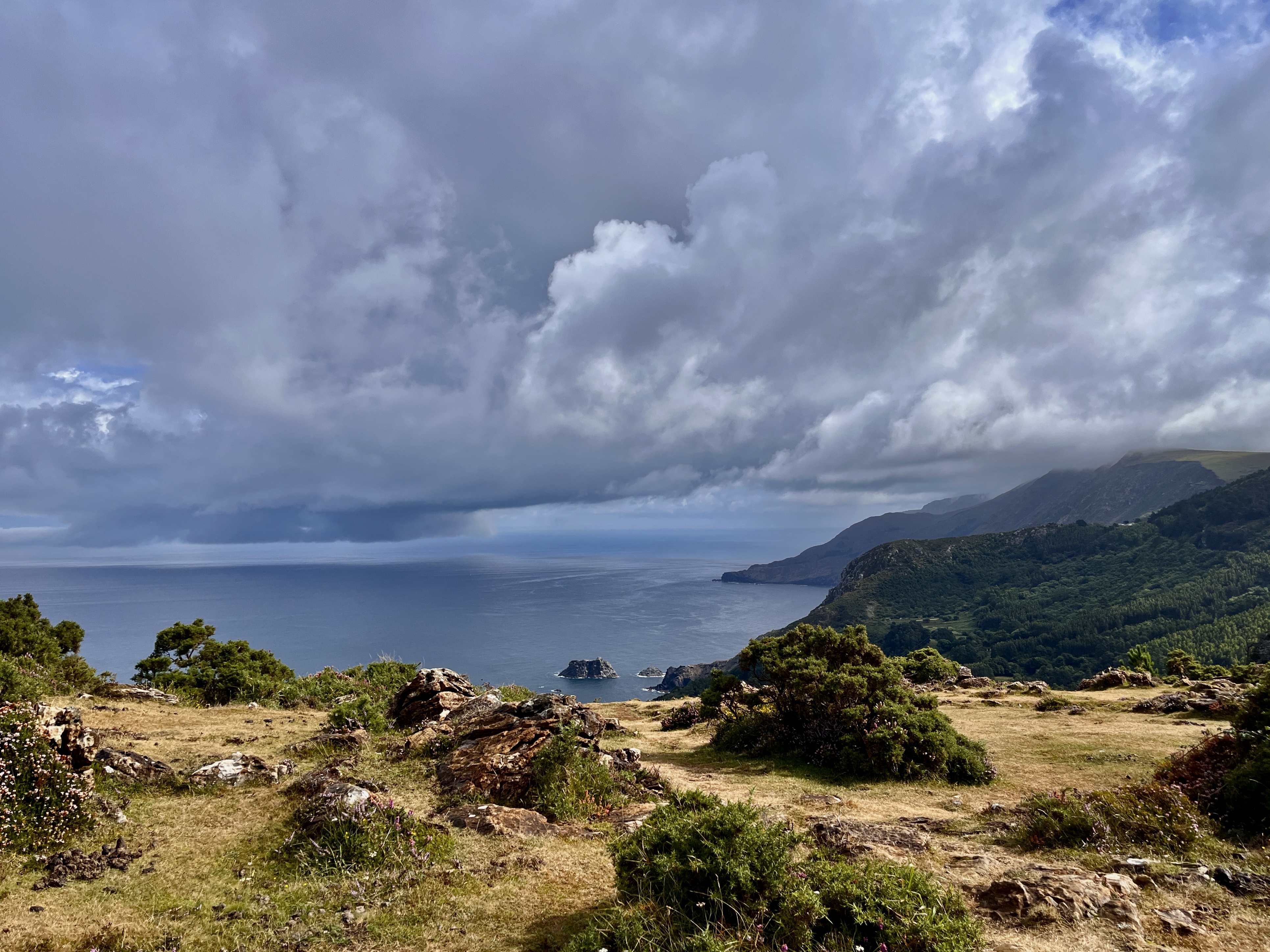
    I kept walking along the narrow mountain path, letting the vastness of the landscape hold what I could not yet understand. The air was cold, the valleys wide and quiet. Around me the mountains stood silent, unmoved by my struggle, their ridges rising calmly against the sky. Patches of snow rested patiently on their slopes, waiting for spring to carry them back to the sea. – How could something hold so much weather? – They stood like ancient giants with soft hearts, enduring every storm that passed.

    Eventually I noticed grey clouds gathering over the nearby peaks, and I decided it was time to return.

    When I arrived back at the hotel, I shared what I had been going through with another participant. She looked at me gently and said:

    “This is the peak, where healing is taking place. Embrace it.”

    I stared at her, wide-eyed.

    Embrace this?

    The thought of another sleepless night terrified me. Finally, with humility, I asked for painkillers.

    That night I still woke often, but I managed to sleep a few consecutive hours. It felt like a miracle.

    An Unexpected Turning Point

    The following day I began my journey home.

    To my dismay, the pain returned despite the medication. The idea of a full day of travel in that condition felt unbearable.

    In a moment of surrender, I did something unexpected.

    Instead of fighting the pain, I spoke to it internally.

    “Please give me a break,” I pleaded.

    Then I practiced some of the techniques I had learned during the seminar.

    Two hours later, the pain was gone.

    It did not return for the rest of the journey.

    I didn’t even need the painkillers.

    I remember thinking:

    Well… this is interesting.

    A New Relationship With Pain

    When I arrived home, the pain eventually returned.

    But something inside me had changed.

    The pain no longer felt like an intruder. It felt familiar—almost like a companion whose presence I could tolerate.

    Slowly, fear began to dissolve. Shame and frustration visited less often. My body softened around the experience instead of bracing against it.

    It had become part of my inner landscape, like weather moving through a terrain I was only beginning to know.

    What Pain Revealed

    I cannot fully explain what happened.

    Somewhere along the way, my perspective shifted. The question stopped being How do I make this pain go away? and became What is moving through me right now?

    The mountains and the storm became a mirror.

    When I think back to those mountains in Asturias—to the path I walked with my arm hanging beside me, unsure of what was happening inside my own body—I realize that at the time I believed the pain was something to defeat, something that had gone wrong.

    Now I see it differently.

    Mountains do not resist the weather that passes through them. Storms arrive, winds carve their ridges, rain reshapes their slopes. The mountains endure it all with a quiet strength, allowing themselves to be slowly shaped by the elements.

    My body, I realized, might not be so different.

    Pain had come like a storm across a landscape I had barely learned to inhabit. And when I finally stopped trying to push it away, allowing it to shape me rather than fighting its force, something inside began to soften.

    Weeks passed.

    Little by little, the pain faded.

    One day I realized I had forgotten about it.

    Quietly, it had left.
    Like a storm that had finished crossing the mountains, it passed as quietly as it had arrived.